
Technology is becoming more connected every day. Your smartwatch can communicate with your phone, a smart television can connect to the internet, and a security camera can send an alert directly to your smartphone. Even everyday objects such as lights, thermostats, cars, refrigerators, and factory machines can now connect to digital networks.
This growing world of connected devices is known as the Internet of Things, or IoT.
The term may sound technical, but the basic idea is easy to understand. IoT refers to physical objects that are connected to the internet or another network and can collect, send, receive, or exchange information.
In simple terms, IoT allows physical devices to communicate and share information with people, applications, and other devices.
You may already use IoT technology without realizing it. If you wear a fitness tracker, use a smart speaker, monitor your home with a connected camera, or control lights from your smartphone, you are already using the Internet of Things.
What Does IoT Stand For?
IoT stands for Internet of Things.
The “Internet” part refers to the network connections that allow devices to communicate.
The “Things” part refers to the physical objects being connected.
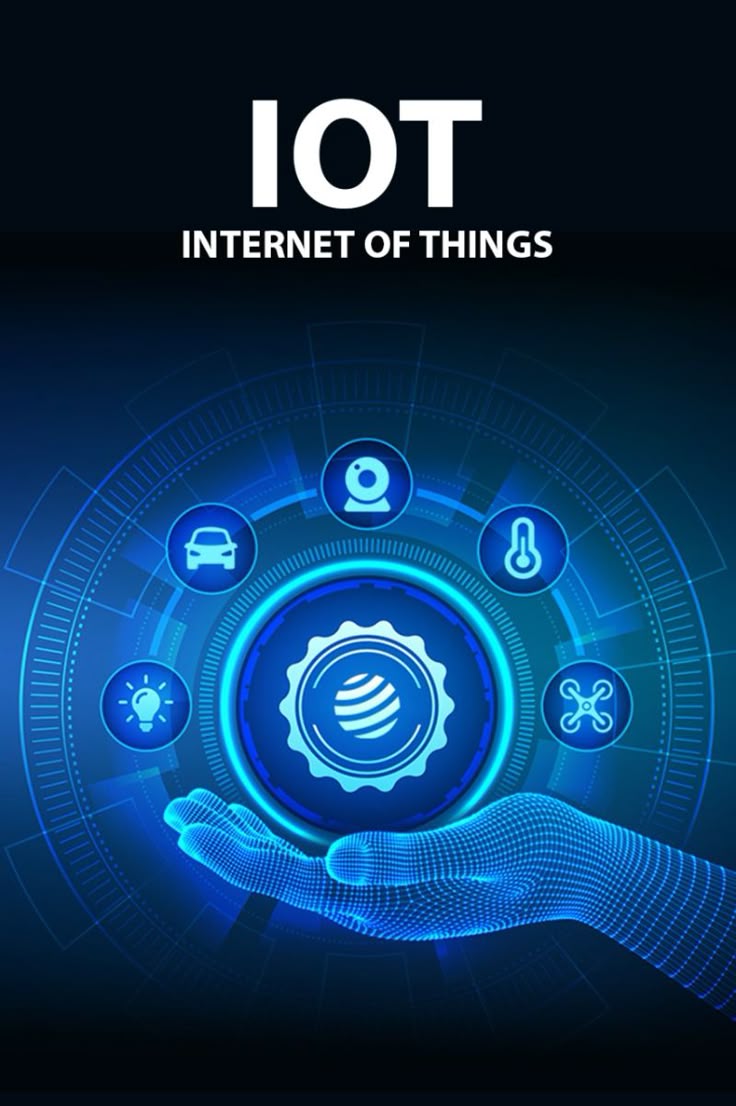
These “things” can be almost anything that can contain sensors, software, processing capabilities, and some form of network connection.
Examples include:
- Smartwatches
- Fitness trackers
- Smart TVs
- Smart speakers
- Security cameras
- Smart lights
- Smart thermostats
- Connected cars
- Smart appliances
- Medical devices
- Industrial machines
- Agricultural sensors
The main idea is that these physical objects can collect and exchange information instead of operating completely on their own.
How Does IoT Work?
An IoT system usually involves several components working together.
Sensors
Sensors allow devices to observe or measure something in the physical world.
A sensor can detect things such as:
- Temperature
- Movement
- Light
- Humidity
- Location
- Pressure
- Sound
- Heart rate
For example, a fitness tracker uses sensors to collect information about movement and other activity.
Connectivity
After collecting information, an IoT device needs a way to communicate.
Devices can use Wi-Fi, Bluetooth, cellular networks, Ethernet, and other communication technologies.
The choice depends on the device, its location, the amount of data it needs to send, and how quickly the information needs to be transmitted.
Data Processing
Once information is collected, it may need to be processed.
Some IoT devices process information directly on the device. Others send data to a computer server or cloud platform.
For example, a smart security camera may capture video and send information to a cloud-based service for storage or analysis.
Applications and User Interfaces
IoT devices often work with applications that allow people to view information or control the device.
A smartphone application could allow a homeowner to check a security camera, turn lights on or off, or adjust a smart thermostat.
This creates a connection between the physical device and the person using it.
What Are Some Examples of IoT?
IoT is not a technology that exists only in laboratories or large companies. It is already part of everyday life.
Smartwatches
Smartwatches are common examples of IoT devices.
They can collect information about movement, activity, heart rate, sleep, and other measurements depending on the model.
They can also communicate with smartphones and online services.
Smart Home Devices
Smart home technology allows people to connect devices around their homes.
Smart lights can be controlled remotely.
Smart thermostats can automatically adjust temperature settings.
Smart locks can provide digital access controls.
Smart speakers can respond to voice commands.
Connected cameras can allow homeowners to monitor their property remotely.
These devices can work individually or as part of a larger smart home system.
Smart Appliances
Modern appliances can also include connected features.
A smart washing machine might allow a user to check the status of a cycle from a smartphone.
A connected oven could provide notifications or allow certain settings to be controlled remotely.
The purpose is generally to make household tasks more convenient.
Connected Cars
Cars increasingly contain sensors, computers, and internet connectivity.
Connected vehicles can provide navigation, entertainment, maintenance information, emergency services, and other features.
Some vehicles can communicate with smartphones and online services.
As vehicle technology continues to develop, connectivity is becoming an increasingly important part of modern transportation.
How Is IoT Used in Healthcare?
IoT can play an important role in healthcare.
Wearable devices can collect certain types of health and activity information.
Hospitals can use connected equipment to monitor devices, track supplies, manage facilities, and support patient care.
For example, a connected medical device might send information to a monitoring system so healthcare professionals can review it.
Remote monitoring can also help healthcare providers collect information from patients outside traditional healthcare facilities in appropriate situations.
However, healthcare IoT involves sensitive information. Privacy, security, accuracy, reliability, and appropriate professional oversight are therefore extremely important.
How Is IoT Used in Agriculture?
Agriculture is another field where IoT can provide useful applications.
Farmers can use sensors to monitor soil moisture, temperature, humidity, weather conditions, water systems, and other environmental factors.
Imagine a large farm with sensors placed throughout different areas.
Instead of manually checking every part of the field, a farmer could receive information from connected sensors.
If soil moisture falls below a certain level, the system could send an alert or potentially activate an automated irrigation system.
This can help farmers make decisions based on real-time information.
IoT technology can therefore support what is often called smart agriculture or precision agriculture.
What Is Industrial IoT?
When IoT technology is used in industrial environments, it is often called the Industrial Internet of Things, or IIoT.
Factories and industrial facilities can use connected sensors to monitor machines and production systems.
For example, sensors could measure temperature, vibration, pressure, or energy consumption.
If a machine starts behaving differently from normal, the system may alert maintenance staff.
This can support predictive maintenance, where data is analyzed to identify signs of possible equipment problems before a major failure occurs.
Industrial IoT can also help companies monitor production, improve efficiency, reduce waste, and increase visibility into their operations.
What Are the Benefits of IoT?
IoT can provide several important benefits.
Convenience
Connected devices can make everyday activities easier.
For example, users can control smart home devices remotely using a smartphone.
Automation
IoT devices can automatically perform actions based on information they collect.
A smart thermostat can adjust the temperature according to certain conditions or schedules.
Real-Time Information
Connected devices can provide information as events occur.
This can be useful for businesses, healthcare providers, farmers, transportation companies, and consumers.
Improved Efficiency
Businesses can use IoT information to identify waste, monitor equipment, and improve operations.
Better Decision-Making
Data collected from connected devices can provide useful insights.
Organizations can use this information to understand what is happening and make more informed decisions.
What Are the Challenges of IoT?
Although IoT has many potential benefits, it also creates challenges.
Cybersecurity
Security is one of the biggest concerns surrounding connected devices.
Every connected device can potentially create another point that attackers may try to exploit.
Devices with weak passwords, outdated software, or poor security settings can create risks.
Manufacturers and users therefore need to take security seriously.
Privacy
IoT devices can collect significant amounts of information.
A smart camera can collect video.
A smartwatch can collect activity information.
A voice assistant can process voice commands.
This raises important questions about how information is collected, stored, shared, and protected.
Compatibility
Different IoT devices may use different platforms and standards.
This can make it difficult for devices from different manufacturers to communicate seamlessly.
Consumers may need to check compatibility before purchasing multiple connected products.
Cost
IoT devices can require an initial investment.
Businesses may also need to pay for connectivity, cloud services, maintenance, security, and technical support.
The potential benefits need to justify these costs.
Why Is IoT Security So Important?
IoT security is important because connected devices can provide access to networks and information.
Imagine having dozens of connected devices throughout a business. If one device is poorly secured, it could potentially create a pathway into other systems.
For this reason, users should take basic security precautions.
These can include changing default passwords, using strong authentication, keeping device software updated, securing Wi-Fi networks, and purchasing devices from manufacturers that provide appropriate security support.
Businesses may also need network segmentation, monitoring, access controls, and security policies.
How Does AI Work With IoT?
Artificial intelligence can make IoT systems more useful by analyzing the large amounts of information collected by connected devices.
For example, sensors in a factory can collect data about machines.
An AI system can analyze that data and identify unusual patterns.
Similarly, a smart home system could analyze usage patterns and automate certain actions.
The combination of artificial intelligence and IoT is sometimes called AIoT, or Artificial Intelligence of Things.
The basic idea is simple: IoT devices collect information, while AI can help analyze and act on that information.
What Is the Future of IoT?
The number of connected devices is expected to continue growing as technology develops.
Homes, businesses, vehicles, factories, farms, hospitals, and cities can all become increasingly connected.
Smart cities, for example, can use sensors to monitor traffic, energy consumption, environmental conditions, public infrastructure, and other systems.
Advances in wireless communication can also help connected devices communicate more efficiently.
Another important development is edge computing.
Instead of sending every piece of information to a distant cloud server, some processing can happen closer to where the data is collected.
This can reduce delays and potentially improve performance for certain IoT applications.
Is IoT Safe?
IoT can be useful and safe when devices are designed, configured, maintained, and used responsibly.
However, like any connected technology, IoT carries security and privacy risks.
Users should understand what information a device collects and how that information is handled.
Keeping devices updated, using strong passwords, securing home networks, and enabling additional security features where available can reduce certain risks.
Businesses need to take additional precautions because their IoT systems may connect to important operational networks.
Why Does IoT Matter?
The Internet of Things matters because it changes the relationship between physical objects and digital technology.
In the past, many objects simply performed their functions without communicating with other systems.
A traditional light bulb could be switched on or off.
A traditional machine could operate independently.
A traditional thermostat could measure and control temperature locally.
IoT adds connectivity.
A smart light can communicate with an application.
A connected machine can send performance information.
A smart thermostat can share information with other devices.
This ability to collect and exchange information creates new possibilities for automation and decision-making.
Final Thoughts
So, what is IoT?
IoT, or the Internet of Things, is a network of physical devices that can connect to the internet or other networks, collect information, exchange data, and sometimes respond automatically to commands or changes in their surroundings.
From smartwatches and home security cameras to connected cars, agricultural sensors, medical equipment, and industrial machines, IoT is already becoming part of everyday life.
The technology can provide convenience, automation, real-time information, improved efficiency, and better decision-making.
However, IoT also brings challenges involving cybersecurity, privacy, compatibility, cost, and data management.
As more physical objects become connected, the Internet of Things will likely become an increasingly important part of the digital world.
The most important idea to remember is simple: IoT connects the physical world to the digital world, allowing devices to collect information, communicate, and sometimes act on that information automatically.
That connection could continue to change how people live, work, manage businesses, and interact with technology for years to come.