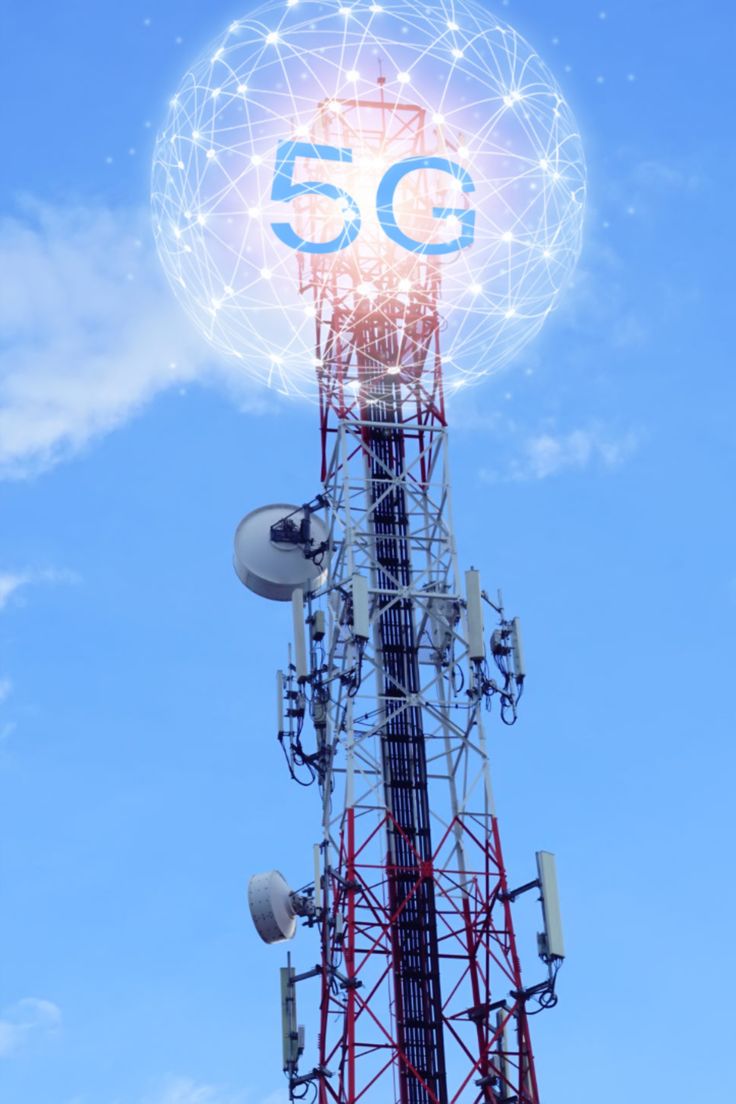

Technology has changed the way people communicate, work, study, watch entertainment, and connect with the world. One of the biggest developments in mobile communication is 5G, the fifth generation of wireless mobile technology.
You may have seen the 5G symbol appear on your smartphone or heard people talking about 5G networks. Mobile companies advertise faster connections, lower delays, and better performance, but what does 5G actually mean?
In simple terms, 5G is a newer generation of mobile network technology designed to provide faster wireless connections, lower latency, and the ability to connect a much larger number of devices at the same time.
5G is not simply about making smartphones download files faster. The technology is also designed to support connected cars, smart homes, industrial equipment, virtual reality applications, Internet of Things devices, and many other technologies.
But to understand why 5G matters, it helps to look at how mobile networks have evolved.
What Does 5G Mean?
The “G” in 5G stands for generation.
That means 5G is the fifth major generation of mobile network technology.
Before 5G, there were several earlier generations.
1G introduced basic analog mobile communication.
2G brought digital mobile communication and made services such as text messaging widely available.
3G improved mobile internet access and made it easier to browse the web from phones.
4G significantly improved mobile internet speeds and helped make video streaming, social media, mobile applications, and other data-heavy services part of everyday life.
5G is the next stage of this development.
Instead of focusing only on faster smartphone internet, 5G is designed to create a more capable wireless network that can support many different types of connected devices and applications.
How Does 5G Work?
5G uses radio frequencies to transmit information wirelessly between devices and cellular network equipment.
When you use a 5G smartphone, the phone communicates with a nearby 5G cell site. That network infrastructure then connects your device to other parts of the mobile network and, when necessary, the wider internet.
One important difference with 5G is that it can operate across different frequency ranges.
Some 5G networks use lower-frequency spectrum, which can travel relatively long distances and provide broad coverage.
Other 5G deployments use higher-frequency spectrum. These frequencies can provide very high capacity and fast data connections, although signals at higher frequencies generally have more difficulty traveling long distances or passing through obstacles.
This is why 5G performance can vary considerably depending on the network, location, spectrum being used, device, and surrounding environment.
Is 5G Faster Than 4G?
One of the most talked-about advantages of 5G is speed.
5G can provide significantly faster data connections than many 4G networks under suitable conditions.
This means activities such as downloading large files, streaming high-quality video, and installing applications can potentially happen more quickly.
However, the actual speed a person experiences depends on several factors.
These can include the mobile network, network congestion, signal strength, spectrum, location, smartphone capabilities, and the specific 5G technology being used.
Therefore, seeing a 5G symbol on a phone does not guarantee a particular download speed.
For many users, the most noticeable improvement may not simply be raw speed. Other characteristics of 5G can be equally important.
What Is Latency?
Latency is another important part of the 5G conversation.
Latency refers to the delay between sending information and receiving a response.
Imagine playing an online game. When you press a button, you want the game to respond quickly. If there is a noticeable delay, the experience can become frustrating.
Lower latency can make certain online activities feel more responsive.
This can be useful for online gaming, interactive applications, remote control systems, augmented reality, virtual reality, and other technologies where quick communication matters.
However, latency is influenced by more than just the mobile network. The distance to servers, internet routing, application design, and other factors can also affect the experience.
Why Is 5G Important?
5G is important because modern society is becoming increasingly connected.
People are no longer connecting only smartphones and computers to networks. Homes can contain smart TVs, cameras, speakers, thermostats, appliances, security systems, and other connected devices.
Businesses may operate thousands of connected sensors and machines.
Cities may use connected systems to manage transportation, infrastructure, energy, and public services.
5G is designed to help networks handle this growing number of connections.
5G and Smartphones
For ordinary consumers, smartphones are probably the most visible use of 5G.
A compatible smartphone connected to a 5G network may provide faster mobile internet and improved performance in areas where the network is well developed.
This can make it easier to:
- Stream high-quality videos
- Download large files
- Use cloud applications
- Participate in video calls
- Play online games
- Browse websites
- Upload photos and videos
- Use data-heavy applications
However, a 5G smartphone does not automatically mean you will always experience extremely fast internet.
Network coverage and local conditions still matter.
5G and Smart Homes
5G can also contribute to the development of connected homes.
Smart homes may contain many devices that communicate with each other or connect to online services.
Examples include:
- Smart security cameras
- Smart doorbells
- Smart lighting
- Smart thermostats
- Smart speakers
- Connected appliances
- Smart locks
Not all of these devices require 5G specifically. Many smart-home products use Wi-Fi, Bluetooth, or other wireless technologies.
However, 5G can provide another connectivity option and can support certain connected devices and applications.
5G and the Internet of Things
One of the major areas associated with 5G is the Internet of Things, often called IoT.
The Internet of Things refers to physical devices that can collect, send, receive, or process information through networks.
These devices can include sensors, machines, vehicles, appliances, and industrial equipment.
Imagine a factory with thousands of sensors monitoring machinery. These sensors could collect information about temperature, movement, pressure, or equipment performance.
A connected network can allow this information to be transmitted to systems that analyze it.
5G is designed to support large numbers of connected devices, making it potentially useful for large-scale IoT deployments.
5G and Transportation
Transportation is another area where connected wireless technology could become increasingly important.
Connected vehicles can communicate with online services, navigation systems, traffic information platforms, and other systems.
5G can support high-speed communication between connected devices and networks.
This could contribute to applications involving traffic management, fleet monitoring, logistics, and connected vehicles.
It is important to remember, however, that 5G by itself does not create self-driving cars. Autonomous driving involves many different technologies, including cameras, radar, sensors, software, artificial intelligence, mapping systems, and vehicle-control technologies.
5G and Healthcare
Healthcare is another area where advanced connectivity may provide new opportunities.
Reliable wireless networks can support connected medical equipment, remote monitoring systems, video consultations, and other digital healthcare applications.
For example, certain connected devices can collect information and send it to healthcare systems for review.
5G may also help support technologies that require reliable communication and low latency.
However, healthcare applications require particularly strong security, reliability, privacy protections, and regulatory oversight.
5G and Businesses
Businesses can use 5G for more than smartphones.
Companies may use private wireless networks to connect equipment, sensors, computers, and other devices.
Manufacturing facilities, warehouses, ports, and other industrial environments can contain large numbers of connected machines.
A high-capacity wireless network can make it easier to manage these devices and exchange information.
For some organizations, private 5G networks may provide an alternative or complement to traditional wired and Wi-Fi infrastructure.
Does 5G Replace Wi-Fi?
No.
5G and Wi-Fi are different technologies, although they can sometimes serve similar purposes.
Wi-Fi is commonly used to connect devices to a local network, such as the network inside a home, school, office, or business.
5G is a cellular mobile network technology designed to provide connectivity over broader areas.
A person might use Wi-Fi at home and switch to 5G when they leave the house.
The two technologies can also work together in many environments.
Does 5G Use More Battery?
The effect of 5G on battery life depends on the smartphone, network conditions, software, and how the connection is being used.
Early generations of 5G devices could sometimes consume more power than 4G devices, particularly when network conditions were challenging.
Modern smartphones and network technologies have improved considerably.
Still, activities such as downloading large files, streaming high-resolution video, or using demanding applications can consume significant battery power regardless of whether a phone is connected through 4G or 5G.
What Are the Challenges of 5G?
Although 5G offers several potential benefits, deploying the technology also presents challenges.
Infrastructure Costs
Building and upgrading mobile networks requires significant investment.
Network operators need to install equipment, obtain spectrum, upgrade infrastructure, and expand coverage.
Coverage
5G coverage is not necessarily identical everywhere.
Different frequency bands have different characteristics, and some higher-frequency signals cover smaller areas.
As a result, users may experience different levels of 5G availability depending on where they live or travel.
Device Compatibility
A phone must support the appropriate 5G technologies and frequency bands to use a particular 5G network.
Older smartphones may not support 5G.
Network Congestion
Even a fast network can experience congestion when many people are using it simultaneously.
The actual experience can therefore vary depending on local network conditions.
Is 5G Safe?
Questions about the safety of 5G have received significant public attention.
5G networks use radiofrequency electromagnetic energy, just like previous generations of wireless communication.
The relevant health and safety question is whether exposure remains within established limits designed to protect people.
Wireless equipment is subject to technical standards and regulatory requirements, although specific rules and oversight systems vary by country.
People who have concerns should consult information from recognized public-health and telecommunications authorities rather than relying on social media claims or unverified online posts.
What Do You Need to Use 5G?
To use a 5G mobile network, you generally need three things.
First, you need a 5G-compatible device, such as a smartphone or other supported equipment.
Second, you need a mobile service plan that provides access to 5G where applicable.
Third, you need to be in an area where the relevant 5G network is available.
If any of these conditions is missing, your device may connect using another available network technology, such as 4G.
What Is the Future of 5G?
5G development is still evolving.
As networks become more widely deployed, businesses and developers may find new ways to use the technology.
Future applications could involve connected factories, advanced robotics, smart infrastructure, immersive entertainment, connected transportation, and large-scale Internet of Things systems.
The development of artificial intelligence could also increase demand for reliable and fast connectivity.
At the same time, future wireless technology will continue to develop. Researchers and companies are already exploring technologies beyond 5G.
The important point is that mobile networks are not standing still. Each generation builds on previous technologies and responds to changing communication needs.
Final Thoughts
5G is the fifth generation of mobile network technology, designed to provide improvements in speed, capacity, responsiveness, and support for connected devices.
For smartphone users, 5G can provide faster mobile internet and improved performance in areas with strong network coverage. But its importance extends beyond smartphones.
The technology can support applications involving smart homes, connected vehicles, industrial equipment, healthcare systems, businesses, and the Internet of Things.
At the same time, 5G is not a magic solution to every connectivity problem. Coverage, network congestion, device compatibility, infrastructure, and local conditions all influence the experience.
Understanding what 5G actually does makes it easier to separate the technology’s genuine capabilities from exaggerated claims.
As our world becomes increasingly connected, mobile networks will play an important role in how people and devices communicate. 5G is an important step in that development, and its influence will likely continue to grow as more networks, devices, and applications adopt the technology.