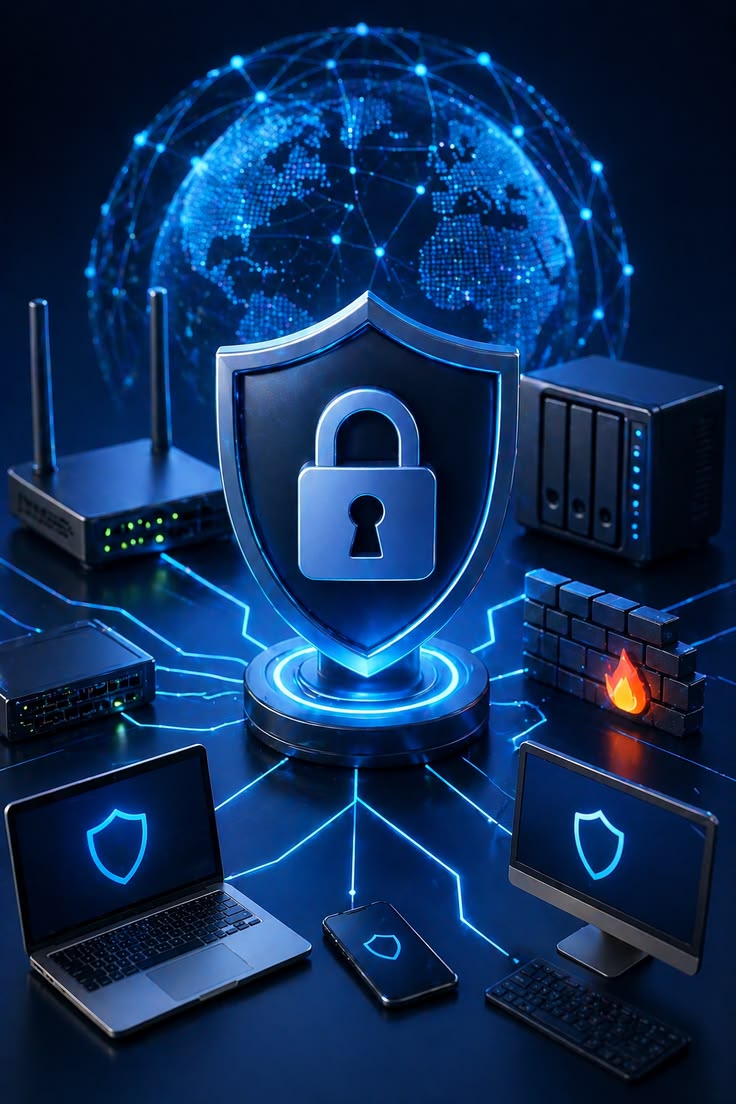


The internet has become an important part of everyday life. People use smartphones and computers to communicate with friends, shop online, manage bank accounts, study, work, store photos, and access countless services. Businesses also depend on digital systems to communicate with customers, manage employees, store information, and operate their organizations.
But as our lives have become more connected, protecting digital information has become increasingly important.
This is where cybersecurity comes in.
Cybersecurity refers to the practices, technologies, tools, and processes used to protect computers, networks, applications, devices, and digital information from unauthorized access, attacks, damage, or disruption.
You do not need to work for a technology company to care about cybersecurity. If you have an email account, smartphone, social media account, online banking account, or computer, cybersecurity can affect you.
In simple terms, cybersecurity is about keeping digital systems and information safe.
Why Is Cybersecurity Important?
Imagine waking up one morning and discovering that someone has accessed your email account. They have changed your password and are using your account to contact your friends.
Or imagine receiving a message that appears to come from your bank. It asks you to click a link and enter your account details. You follow the instructions without realizing that the message is fake.
These are examples of situations where cybersecurity matters.
Cybersecurity helps protect people and organizations against many different digital threats. Without appropriate security measures, sensitive information can potentially be stolen, accounts can be compromised, systems can be disrupted, and businesses can suffer financial and reputational damage.
As more activities move online, cybersecurity has become an important part of modern digital life.
What Does Cybersecurity Protect?
Cybersecurity is not limited to protecting computers.
It can involve protecting many types of digital assets, including:
- Personal information
- Passwords
- Financial information
- Email accounts
- Social media accounts
- Smartphones
- Computers
- Business networks
- Websites
- Cloud accounts
- Databases
- Software applications
- Online services
For businesses, cybersecurity can also protect customer information, employee records, intellectual property, financial records, and important operational systems.
The Three Main Goals of Cybersecurity
Cybersecurity is often described using three important principles: confidentiality, integrity, and availability.
Confidentiality
Confidentiality means keeping information accessible only to people who are authorized to see it.
For example, your online banking information should not be publicly available. Your private messages should also remain private.
Passwords, access controls, encryption, and other security measures can help protect confidentiality.
Integrity
Integrity means making sure information remains accurate and has not been improperly changed.
For example, imagine that a company’s financial records show that it has $50,000 in an account. If someone secretly changes the information to show $5,000, the data is no longer accurate.
Cybersecurity measures can help prevent unauthorized changes and detect suspicious activity.
Availability
Availability means ensuring that authorized users can access systems and information when they need them.
A website that is constantly unavailable because of a cyberattack cannot properly serve its users.
Businesses therefore use various security and backup measures to help keep important systems available.
Together, confidentiality, integrity, and availability form an important foundation of cybersecurity.
Common Types of Cybersecurity Threats
There are many different types of cyber threats. Some are highly technical, while others depend on tricking people into making mistakes.
Understanding common threats can help people become more careful online.
Phishing
Phishing is one of the most common cybersecurity threats.
A phishing attack usually involves a fake message designed to convince someone to reveal sensitive information or perform an unsafe action.
For example, you might receive an email that appears to come from a bank. The message could claim that there is a problem with your account and ask you to click a link.
The link may lead to a fake website designed to collect your login information.
Phishing can happen through email, text messages, social media, and other communication platforms.
Malware
Malware is a general term for malicious software designed to perform harmful or unauthorized actions.
Different types of malware include viruses, worms, trojans, spyware, and ransomware.
Malware can potentially steal information, damage files, monitor activity, or interfere with computer systems.
Ransomware
Ransomware is a type of malicious software that can prevent users from accessing files or systems.
Attackers may demand payment in exchange for restoring access.
Ransomware can affect individuals, businesses, schools, hospitals, and other organizations.
Maintaining reliable backups and using strong security practices can help reduce the potential impact of such attacks.
Password Attacks
Passwords are one of the simplest ways to protect an account, but weak passwords can create security risks.
Attackers may attempt to guess passwords, reuse credentials stolen from other services, or use automated techniques to gain unauthorized access.
Using unique and strong passwords for important accounts can make unauthorized access more difficult.
Social Engineering
Not every cyberattack requires sophisticated software.
Social engineering involves manipulating people into revealing information or performing actions that compromise security.
For example, someone might pretend to be a technical support employee and ask for your password.
The attacker is not necessarily breaking into the system directly. Instead, they are trying to convince a person to give them access.
This is why cybersecurity is not only a technical issue. Human awareness is also extremely important.
How Can You Protect Yourself Online?
You do not have to be a cybersecurity expert to improve your digital security.
Several simple habits can make a meaningful difference.
Use Strong and Unique Passwords
Avoid using simple passwords such as your name, birthday, or common words.
It is also important to avoid using the same password for every account. If one account is compromised, attackers may try the same password on other services.
A password manager can help you create and manage strong, unique passwords.
Turn On Multi-Factor Authentication
Multi-factor authentication, often called MFA, provides an additional layer of protection.
Instead of relying only on a password, an account may require another form of verification, such as an authentication app, security key, or verification code.
This means that even if someone obtains your password, they may still be unable to access your account without the additional authentication method.
Be Careful With Unexpected Messages
If you receive an unexpected email or message asking you to click a link, download a file, or provide sensitive information, slow down before taking action.
Check who sent the message and consider whether the request makes sense.
If a message claims to come from a bank or another organization, you can independently visit the organization’s official website rather than clicking a link in the unexpected message.
Keep Software Updated
Software updates do more than add new features.
They can also fix security vulnerabilities that attackers might otherwise exploit.
Keeping your operating system, web browser, applications, and security software updated can therefore be an important part of basic cybersecurity.
Be Careful on Public Networks
Public Wi-Fi can be convenient, but users should still be careful when accessing sensitive accounts on unfamiliar networks.
Avoid entering sensitive information on suspicious networks or websites, and make sure websites use secure connections.
For particularly sensitive activities, use trusted networks and appropriate security tools.
Back Up Important Information
Backups can be extremely valuable if your files are lost, damaged, accidentally deleted, or affected by malicious software.
Important documents, photographs, and other files should be backed up regularly.
Keeping backups in a separate location can provide additional protection against certain types of incidents.
What Is Network Security?
Network security focuses on protecting computer networks from unauthorized access, misuse, attacks, and disruption.
Businesses often have complex networks connecting computers, servers, applications, employees, and other devices.
Security technologies such as firewalls, access controls, monitoring systems, and network segmentation can help protect these environments.
For individuals, network security can also involve securing a home Wi-Fi network with a strong password and keeping the router’s software updated.
What Is Application Security?
Application security focuses on protecting software and applications from security vulnerabilities.
Developers may use security testing and secure development practices to identify and address weaknesses before software is released.
Application security is particularly important because modern websites and mobile applications often process sensitive information.
A vulnerability in an application could potentially allow unauthorized users to access information or perform actions they should not be able to perform.
What Is Cloud Security?
Many people and organizations now store information and use software through cloud services.
Cloud security refers to the technologies, policies, and practices used to protect cloud-based systems and information.
Examples can include controlling who has access to cloud accounts, protecting data, monitoring activity, and using appropriate authentication.
Cloud services can offer many benefits, but moving information to the cloud does not automatically make it secure. Users and organizations still need to follow good security practices.
Why Are Businesses Concerned About Cybersecurity?
Cybersecurity is particularly important for businesses because companies often store large amounts of valuable information.
A company might hold customer names, email addresses, payment information, employee records, business documents, and intellectual property.
A serious cybersecurity incident can interrupt operations and potentially expose sensitive information.
Businesses therefore often invest in security tools, employee training, monitoring, backups, access controls, incident response plans, and other measures.
Cybersecurity is not simply an IT department responsibility. Employees across an organization can play a role in keeping systems secure.
What Is a Cybersecurity Professional?
Cybersecurity professionals help organizations identify risks, protect systems, investigate incidents, and respond to security problems.
There are many different cybersecurity careers.
Some professionals work in security operations and monitor systems for suspicious activity. Others specialize in penetration testing, security engineering, digital forensics, risk management, cloud security, or security architecture.
As technology continues to expand, organizations need people who understand how to protect digital environments.
Can Cybersecurity Prevent Every Attack?
No security system can guarantee that every cyberattack will be prevented.
Cybersecurity is about reducing risk, detecting problems, responding to incidents, and limiting potential damage.
Attackers constantly develop new techniques, while security professionals continuously develop new defenses.
This means cybersecurity is an ongoing process rather than something that can be completed once and forgotten.
Regular software updates, employee education, security monitoring, backups, and risk assessments can all contribute to stronger protection.
The Future of Cybersecurity
The importance of cybersecurity is likely to continue growing as more devices and services become connected.
Artificial intelligence, cloud computing, smart devices, remote work, online banking, connected vehicles, and other technologies are creating new opportunities while also introducing new security challenges.
The number of connected devices means there are more systems that need protection.
At the same time, cybersecurity tools are becoming more sophisticated. Organizations are using automated monitoring, machine learning, advanced authentication, encryption, and other technologies to identify and respond to threats.
The future of cybersecurity will likely involve a combination of advanced technology and better human awareness.
Final Thoughts
So, what is cybersecurity?
Cybersecurity is the practice of protecting digital systems, devices, networks, applications, and information from unauthorized access, attacks, damage, and disruption.
It affects everyone who uses technology, not just cybersecurity professionals or large companies.
Simple habits such as using strong passwords, enabling multi-factor authentication, keeping software updated, being cautious with unexpected messages, and backing up important files can make a significant difference.
As our dependence on digital technology continues to grow, understanding cybersecurity becomes increasingly valuable.
The goal is not to become afraid of technology. Instead, it is to learn how to use technology more safely and responsibly.
Cybersecurity is ultimately about protecting what matters in the digital world — your information, your accounts, your devices, your business, and your privacy.