
Technology is generating more data than ever before. Smartphones, smartwatches, security cameras, connected cars, industrial machines, medical devices, and other smart technologies constantly collect and exchange information.
Much of this information is sent to centralized data centers or cloud platforms for processing. Cloud computing has made it possible for businesses and individuals to access powerful computing resources without having to manage all of the physical hardware themselves.
But there is a challenge.
When a device needs an immediate response, sending information all the way to a distant data center and waiting for a response can sometimes create delays.
This is where edge computing comes in.
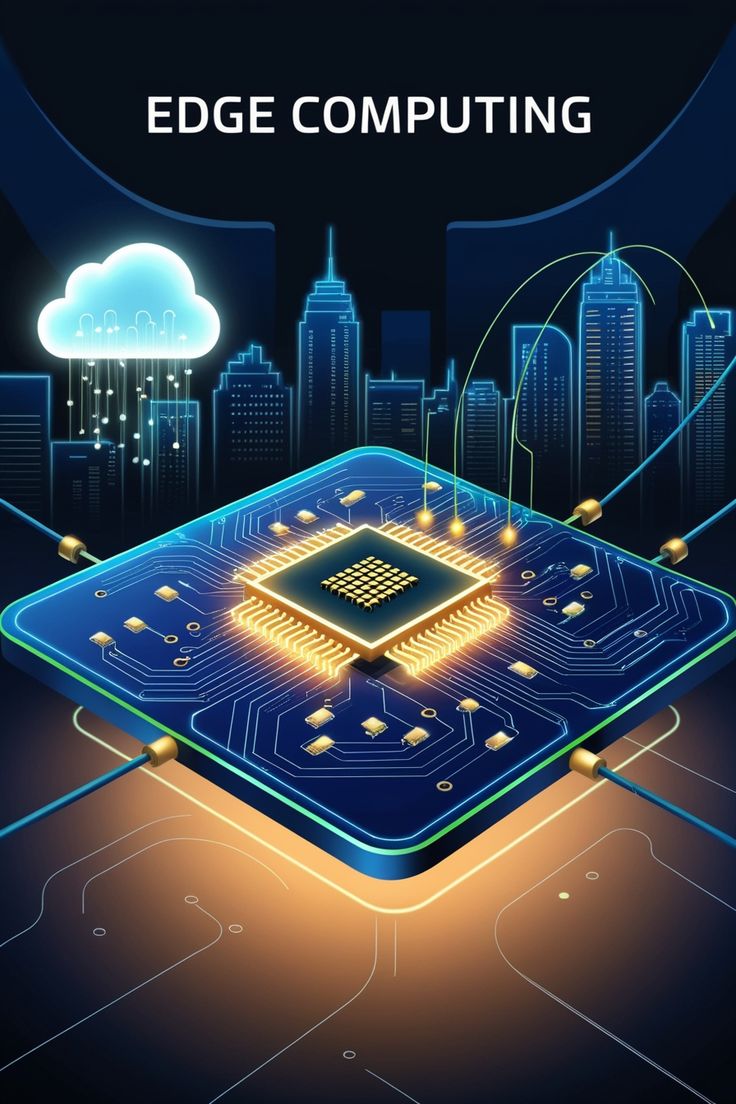
In simple terms, edge computing is a method of processing data closer to where the data is created instead of sending everything to a centralized cloud or data center.
The basic idea is simple: bring computing power closer to the devices, people, and systems that need it.
What Does Edge Computing Mean?
To understand edge computing, it helps to think about where data is processed.
Imagine a security camera monitoring a building.
The camera could send every piece of video footage to a distant cloud server for analysis. The cloud system could then determine whether something unusual happened and send a notification back.
This process can work well, but it requires data to travel between the camera and the remote server.
With edge computing, some of the processing can happen closer to the camera.
For example, an edge device could analyze the video locally and determine whether a specific event has occurred. Instead of sending all the raw video to the cloud, the system might only send important information or alerts.
This can reduce the amount of data that needs to travel across the network.
How Does Edge Computing Work?
Edge computing typically involves several layers of technology working together.
Devices
The first layer includes devices that generate data.
These could include:
- Security cameras
- Smartphones
- Smartwatches
- Industrial machines
- Sensors
- Connected vehicles
- Medical devices
- Smart appliances
These devices can produce information continuously.
Edge Devices
An edge device or edge computing system processes information closer to where it is generated.
It could be a specialized computer, gateway, router, local server, or another device capable of processing data.
The edge device can perform certain calculations or analysis before information is sent to a centralized system.
Cloud or Central Data Centers
Cloud systems can still play an important role.
The cloud can store large amounts of information, perform more complex analysis, coordinate systems, and provide centralized management.
Edge computing does not necessarily replace cloud computing.
Instead, the two technologies can work together.
Why Is Edge Computing Important?
One of the biggest reasons edge computing matters is latency.
Latency refers to the delay between sending information and receiving a response.
For some applications, even a small delay can matter.
Imagine an autonomous vehicle traveling on a busy road.
If the vehicle’s system detects an obstacle, it needs to respond quickly.
Sending information to a distant server, waiting for analysis, and then receiving instructions could introduce unnecessary delay.
Processing important information closer to the vehicle can help reduce that delay.
Not every application needs this level of speed, but for certain systems, fast responses can be extremely important.
What Is the Difference Between Edge Computing and Cloud Computing?
Edge computing and cloud computing are closely related, but they process data in different locations.
Cloud computing generally processes and stores data using centralized remote servers or data centers.
Edge computing processes some data closer to where it is generated.
Consider a smart factory.
With a traditional cloud-focused system, machines might send large amounts of information to a cloud platform.
With edge computing, a local edge system could analyze some machine information within the factory.
The cloud could still receive selected information for long-term storage and broader analysis.
The two approaches can therefore complement each other.
What Are the Benefits of Edge Computing?
Edge computing can provide several advantages.
Faster Response Times
Processing data closer to the source can reduce the time required to send information to a distant server and receive a response.
This can be useful for applications that require quick decisions.
Reduced Network Traffic
Instead of sending every piece of information to the cloud, edge systems can process data locally and send only relevant information.
This can reduce the amount of data traveling across a network.
Better Performance
Applications can sometimes perform more efficiently when certain processing tasks happen locally.
This can be particularly useful when large amounts of information are being generated continuously.
Greater Reliability
If an edge system can operate locally, certain functions may continue working even if the connection to a remote cloud service becomes temporarily unavailable.
The exact level of offline functionality depends on how the system is designed.
Privacy Considerations
Processing some information locally can reduce the need to send certain raw data to a central server.
However, edge computing does not automatically guarantee privacy. Organizations still need appropriate security and data protection practices.
How Is Edge Computing Used in IoT?
Edge computing and the Internet of Things, or IoT, are closely connected.
IoT devices can generate enormous amounts of information.
Imagine a large factory containing thousands of sensors.
If every sensor continuously sends raw information to the cloud, the organization may need significant network capacity.
An edge system can process some of that information locally.
For example, it could analyze temperature readings and only send an alert when a machine exceeds a certain threshold.
This reduces unnecessary data transmission while still allowing important information to reach the appropriate systems.
How Is Edge Computing Used in Manufacturing?
Manufacturing is an important application of edge computing.
Modern factories can contain machines equipped with sensors that continuously measure temperature, vibration, pressure, speed, and other conditions.
Edge computing systems can analyze this information close to the machines.
Suppose a machine begins producing unusual vibration patterns.
An edge system could detect the change and alert maintenance workers.
This can support predictive maintenance, where organizations use data to identify potential equipment problems before they lead to major failures.
Edge computing can also support automated production systems that require fast responses.
How Is Edge Computing Used in Healthcare?
Healthcare devices can generate large amounts of information.
Examples include monitoring equipment, medical imaging systems, wearable devices, and connected hospital equipment.
In some situations, processing information closer to the source can help applications respond quickly.
For example, a monitoring system may need to detect a particular change and alert healthcare professionals.
Edge computing can potentially reduce processing delays.
However, healthcare applications require especially careful attention to accuracy, privacy, security, reliability, and professional oversight.
How Is Edge Computing Used in Smart Cities?
Smart cities can use connected sensors to monitor traffic, public infrastructure, energy systems, environmental conditions, and other services.
A city could have sensors collecting information about traffic conditions.
Instead of sending every piece of information to a distant cloud platform, local edge systems could analyze traffic data in real time.
The system could identify congestion and provide information to traffic management systems.
This can help cities respond more quickly to changing conditions.
How Is Edge Computing Used in Autonomous Vehicles?
Connected and autonomous vehicles can generate enormous amounts of data.
Cameras, radar, sensors, GPS systems, and other technologies can continuously collect information about the vehicle and its surroundings.
Some of this information needs to be processed quickly.
Edge computing can allow certain processing tasks to happen within the vehicle or nearby systems.
This can reduce dependence on a distant cloud connection for time-sensitive operations.
The cloud can still be useful for tasks such as storing information, training AI models, analyzing historical data, and managing fleets.
What Role Does Artificial Intelligence Play in Edge Computing?
Artificial intelligence and edge computing can work together in an approach sometimes called edge AI.
AI models can be deployed on edge devices so that certain decisions can be made locally.
For example, a smart security camera could use AI to identify unusual activity without sending every frame of video to a remote server.
A manufacturing system could use an AI model to detect unusual machine behavior locally.
Processing AI tasks at the edge can reduce latency and network traffic in some situations.
However, running AI models locally can also require suitable hardware and efficient software.
What Are the Challenges of Edge Computing?
Edge computing offers benefits, but it also creates challenges.
Security
Edge devices can be located in many different places.
A company might have hundreds or thousands of edge devices spread across factories, stores, vehicles, or other locations.
Protecting all of these devices can be complicated.
Organizations need appropriate authentication, software updates, monitoring, encryption, and access controls.
Management
Managing large numbers of distributed devices can be difficult.
Each device may need maintenance, updates, monitoring, and troubleshooting.
Hardware Costs
Edge computing may require additional hardware at or near the location where data is generated.
Businesses need to consider the cost of purchasing, installing, and maintaining this equipment.
Limited Computing Resources
Edge devices may not have the same computing power as large cloud data centers.